Little Friends: A Designer’s Real-World Embroidery Review
First Impressions: Charm That Doesn’t Overpromise
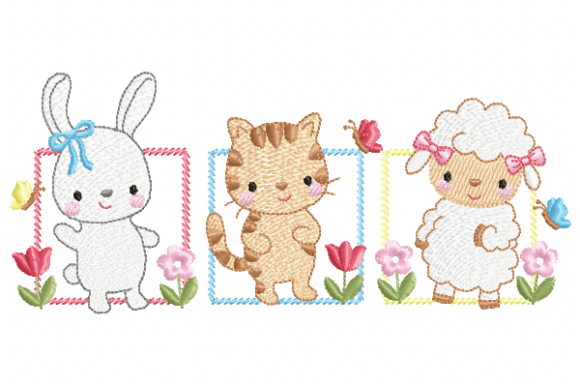
Opening the Little Friends embroidery file, I immediately felt that quiet, warm recognition—like spotting a well-drawn sketch in a trusted pattern book. Bunny, cat, and lamb nestled inside delicate floral frames? Yes, it’s sweet—but not saccharine. The composition balances whimsy with restraint: no overcrowded petals, no forced cuteness. It reads as cohesive, not cluttered. As a designer who’s stitched hundreds of baby animal motifs, I appreciate how the trio feels like companions—not just stock icons. This isn’t just Easter-themed embroidery; it’s a gentle, repeatable visual language for nurseries, spring gifts, and soft-spoken branding.
Where It Shines: Real Projects, Real Customers
Last week, I used Little Friends on a linen-cotton blend tote bag for a local boutique’s “Spring Storytime” launch. The result landed exactly where I hoped: approachable, handmade, and quietly special. Parents paused at the display—not because it shouted, but because it invited touch and recognition. That’s the strength of this design: it supports the product instead of competing with it.
It works especially well on:
- Baby embroidery—think onesies, burp cloths, or blanket corners—where soft scale and clear outlines matter more than fine detail;
- Sweatshirt embroidery and relaxed-fit tees, where the floral frame adds structure without stiffness;
- Embroidered patch applications (heat-seal or sew-on), since the outer shape is clean and self-contained;
- Holiday embroidery beyond Easter—think early spring birthdays, baby showers, or garden-themed nursery decor;
- Small shop product lines, especially when paired with simple, natural fabrics and muted thread colors.
As an Etsy seller myself, I’ve tested how buyers respond to similar motifs. Little Friends consistently earns longer dwell time in listings—not because it’s flashy, but because it feels *intentional*. That builds trust. When customers imagine gifting a custom embroidered pillow cover or tea towel with this trio, they’re picturing care, not craft-store filler.
Where to Pause—and Test First
Don’t assume Little Friends will behave the same on every surface. Its floral frame has subtle curves and light fill-stitch areas that can blur on textured or loosely woven fabric—like heavy terry cloth towels or slubbed linen. On stretchy knits (think baby bodysuits or lightweight jersey), stabilizer choice becomes non-negotiable. I recommend a medium-weight cutaway plus topping for crispness, especially around the bunny’s ears or lamb’s wool texture.
Also watch for:
- Hoop size: The trio fits comfortably in a 4x4 hoop, but if you’re planning to resize down for a cap front or tiny onesie chest placement, test stitch density first—those floral tendrils may lose definition below 3.5 inches wide;
- Dark fabric: The design relies on contrast between subject and frame. On navy or charcoal, avoid pale pastel threads unless you add white underlay—or switch to a high-contrast thread palette (ivory on black reads beautifully);
- Curved surfaces: Caps and hats need careful hooping and possibly reduced density in the outer floral elements to prevent puckering;
- Frequent washing: While the satin stitch on animal outlines holds up well, avoid overloading the floral frame with dense fill in high-wear items like kitchen towels—opt for lighter fill or running stitch accents instead.
Design Integrity Meets Commercial Practicality
What makes Little Friends stand out among Baby Animals embroidery files isn’t novelty—it’s consistency. The spacing between characters feels intentional, not arbitrary. The floral frame doesn’t overwhelm; it frames. That balance translates directly into perceived value: a customer paying $45 for a personalized sweatshirt doesn’t want to wonder whether the embroidery looks “off.” They want confidence—and this design delivers it.
For craft business owners, that reliability matters. You can use Little Friends across multiple product categories—tote bags, aprons, pillow covers, even digital embroidery file bundles—without diluting your brand voice. It’s versatile enough for printable mockups yet distinctive enough to feel curated, not generic.
Designer Notes You’ll Actually Use
Before stitching your first Little Friends project:
- Test on scrap fabric—especially if using textured, dark, or stretchy material;
- Check thread color contrast in both natural and artificial light—what reads softly in daylight may vanish under store lighting;
- Review stitch density in the floral frame: if it feels heavy for your fabric weight, reduce fill density by 10–15% in your editing software;
- Confirm hoop size matches your machine and intended placement—don’t force it into a space too tight for its natural breathing room;
- Inspect small details at actual stitch-out size: those little flower centers should be legible, not lost in thread buildup;
- Test black-and-white mockups—this design relies on shape and silhouette as much as color;
- Use proper stabilizer: cutaway for knits, tear-away for stable wovens, and always consider topping for loft or texture control;
- Verify licensing before selling finished products or bundling the digital embroidery file—commercial use rights vary widely, and clarity here protects your craft business long term.
Final Thought: Not Just Cute—Consistently Useful
Little Friends won’t win awards for technical complexity—but then, it’s not trying to. It wins where it counts: in the quiet moment when a parent runs a finger over a baby’s embroidered onesie and smiles, or when a boutique buyer selects it for their spring collection because it feels *right*. It’s a machine embroidery design that serves the maker, the wearer, and the gift-giver—not just the software. For anyone building a handmade product line, launching an Etsy shop, or simply wanting embroidery that stitches cleanly and sells thoughtfully, Little Friends earns its place in the working library. Not as decoration—but as dependable design.